- The Business Bulletin Newsletter
- Posts
- How Coca-Cola Literally Created Modern Santa Claus
How Coca-Cola Literally Created Modern Santa Claus
The brilliant Christmas marketing strategy that rewrote holiday tradition

Hey friend,
Quick question: What does Santa Claus look like?
Let me guess - a jolly, round man with rosy cheeks, white beard, red suit with white fur trim, black belt, and a warm smile holding a bottle of… Coca-Cola?
That last part seems odd, right? But here’s the wild truth: The Santa you’re picturing in your head right now was essentially created by Coca-Cola’s marketing department in the 1930s.
Today I’m telling you how a soda company didn’t just run a Christmas campaign - they literally redesigned a cultural icon and convinced the entire world that their version was the “real” one.
Santa Before Coca-Cola (He Was Kinda Scary)
Before the 1930s, Santa Claus looked… different. And honestly, kind of terrifying.
Depending on where you were, Santa might be:
- Tall and thin like a creepy elf
- Stern and serious, not jolly at all
- Dressed in green, brown, or even purple
- Sometimes depicted as a gnome-like figure
- Occasionally shown as intimidating rather than friendly
Some illustrations showed him as more ghost-like than gift-giver. In certain European traditions, he had companions who punished naughty children. Not exactly the warm, fuzzy Santa we know today.
There was no single, consistent image. Santa was kind of whatever the artist felt like drawing that day.
Then Coca-Cola saw an opportunity.
The Problem Coca-Cola Needed to Solve
In the 1920s and early 1930s, Coca-Cola faced a challenge: people viewed it as a summer drink. Something refreshing for hot days.
Sales plummeted during winter months. People didn’t think about grabbing a Coke when it was cold outside.
Coca-Cola needed a way to make people associate their product with winter, warmth, happiness, and most importantly - Christmas, the biggest shopping season of the year.
They needed to own winter the way they owned summer.
Enter Haddon Sundblom and His Magic Paintbrush
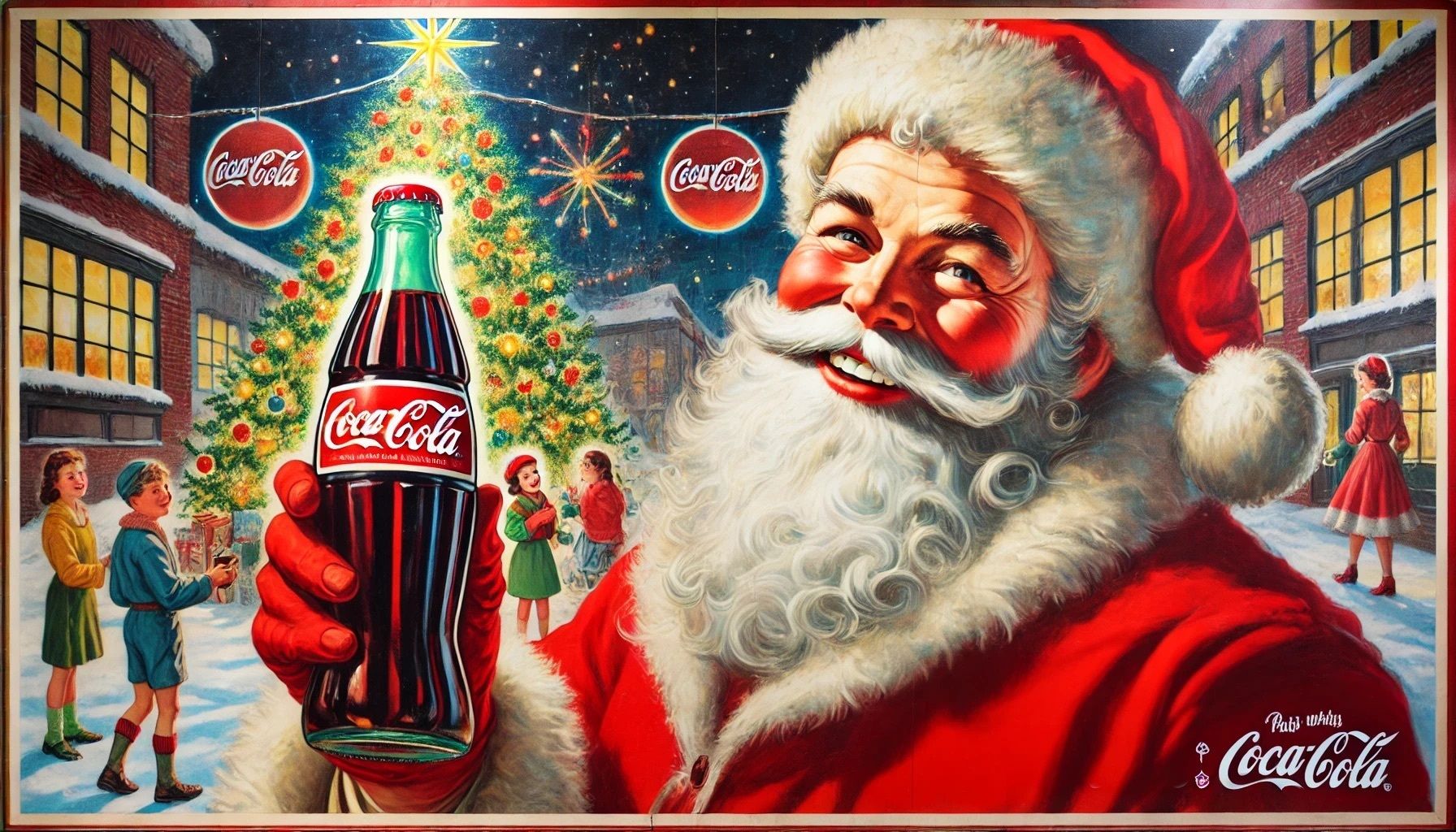
In 1931, Coca-Cola hired a commercial artist named Haddon Sundblom to create a Santa Claus for their Christmas advertising campaign.
Sundblom’s assignment was simple but crucial: Create a Santa that felt warm, friendly, and real. Someone you’d actually want visiting your home.
Here’s what Sundblom did:
He made Santa human-sized and relatable. Not a tiny elf or a towering giant, but a regular (if rotund) person.
He gave Santa a genuine, warm personality. The rosy cheeks, the twinkling eyes, the friendly expression - this Santa felt like your favorite grandfather.
He dressed Santa in Coca-Cola red. The bright red suit with white fur trim perfectly matched Coca-Cola’s brand colors. Coincidence? Definitely not.
He showed Santa enjoying life. Sundblom’s Santa wasn’t just delivering presents. He was pausing to enjoy a Coke, reading letters from children, petting reindeer. He was alive.
Sundblom painted Santa for Coca-Cola every year for over 30 years, creating dozens of different scenes. But the image remained consistent - this was THE Santa Claus.
The Brilliant Distribution Strategy
Creating the image was one thing. Getting it into everyone’s homes was another.
Coca-Cola didn’t just run a few newspaper ads. They went all-in:
Magazine Campaigns: Full-page color advertisements in major magazines like The Saturday Evening Post, Ladies’ Home Journal, National Geographic. Millions of families saw these images every December.
Store Displays: Life-sized cardboard cutouts of Coca-Cola’s Santa appeared in stores across America. Kids saw him everywhere.
Billboards: Giant Santas holding Coke bottles dominated city landscapes during the holidays.
Calendars and Posters: Coca-Cola distributed free calendars featuring Sundblom’s Santa artwork. Families hung these in their homes all year long.
The saturation was incredible. By the late 1930s, you couldn’t escape Coca-Cola’s version of Santa if you tried.
Why It Worked So Well
Coca-Cola’s Santa succeeded because of several genius elements:
Consistency: Every year, the same friendly Santa appeared. This repetition embedded the image in people’s minds.
Emotional Connection: Sundblom’s Santa wasn’t selling Coke aggressively. He was just… there. Enjoying the holiday. The Coke felt natural, not forced.
Family Appeal: These advertisements focused on family, warmth, and joy - universal Christmas themes that transcended the product.
Color Psychology: The bright red and white popped in a world that was still largely black-and-white in media. These ads demanded attention.
Timing: The 1930s were during the Great Depression. People needed hope, warmth, and something magical to believe in. Coca-Cola’s Santa provided that.
The Cultural Takeover
Here’s where it gets wild: Within about 20 years, Coca-Cola’s version of Santa essentially became THE version.
Other companies started copying this Santa design. Movies showed him this way. Department stores dressed their Santas in identical costumes. Greeting cards featured this exact look.
By the 1950s, if you drew Santa any other way, people would say you got it wrong. Coca-Cola had successfully convinced the world that their marketing creation was the authentic, historical Santa Claus.
They didn’t just run a campaign - they rewrote cultural memory.
Did Coca-Cola Actually Invent Modern Santa?
Now, to be fair, Coca-Cola didn’t invent every aspect of modern Santa.
The red suit existed before (thanks to earlier cartoonist Thomas Nast in the 1880s). The North Pole workshop, the reindeer, the “naughty or nice” list - these came from various sources over time.
But what Coca-Cola did was standardize and popularize the image. They took scattered elements and created one definitive, consistent Santa that everyone recognized.
Before Coca-Cola: Santa’s appearance varied wildly.
After Coca-Cola: There was one Santa, and he looked exactly like Sundblom’s paintings.
That’s the power of brilliant, sustained marketing.
The Marketing Lessons